VAPORSTOP CA 500 and CA 1000: same technology, two weights - how to choose for your project
 05.10.2026
In TECHNONICOL's range of self-adhesive vapor barrier membranes for metal roofing, there's a matched pair - VAPORSTOP CA 500 and VAPORSTOP CA 1000. The name says it all: the number refers to the material's mass per square meter, and that weight difference - not a fundamentally different technology - is what determines which version fits a given project.
What they have in common
Both materials are a flexible, reinforced membrane built on an SBS-modified bitumen binder applied to a glass net carrier. The top surface on both is protected with aluminum foil, and the bottom with an easily removable siliconized film over a self-adhesive layer.
Both materials also:
- Provide effective vapor insulation
- Resist shifting and wind load thanks to reliable adhesion
- Install quickly, with no special equipment or specialized skills required
- Resist accidental burning
- Are highly repairable if damaged
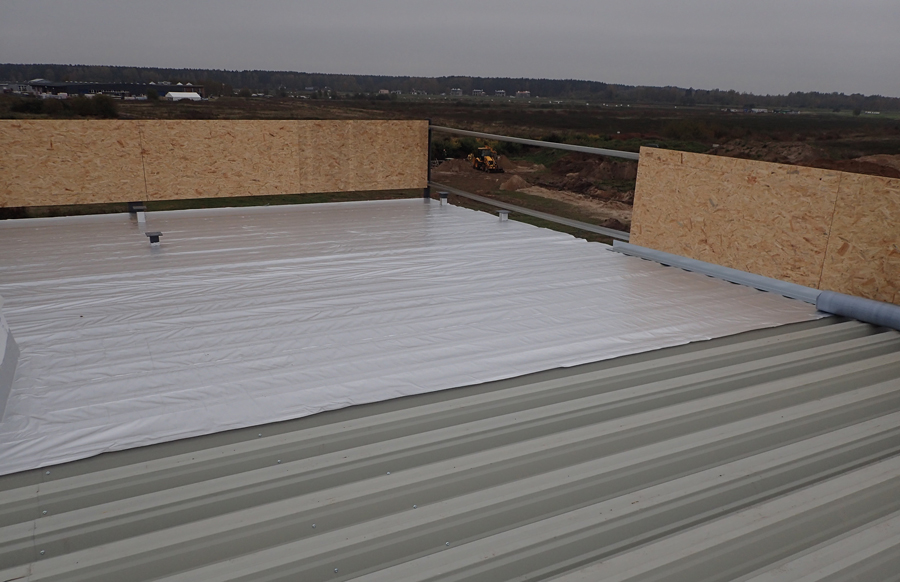
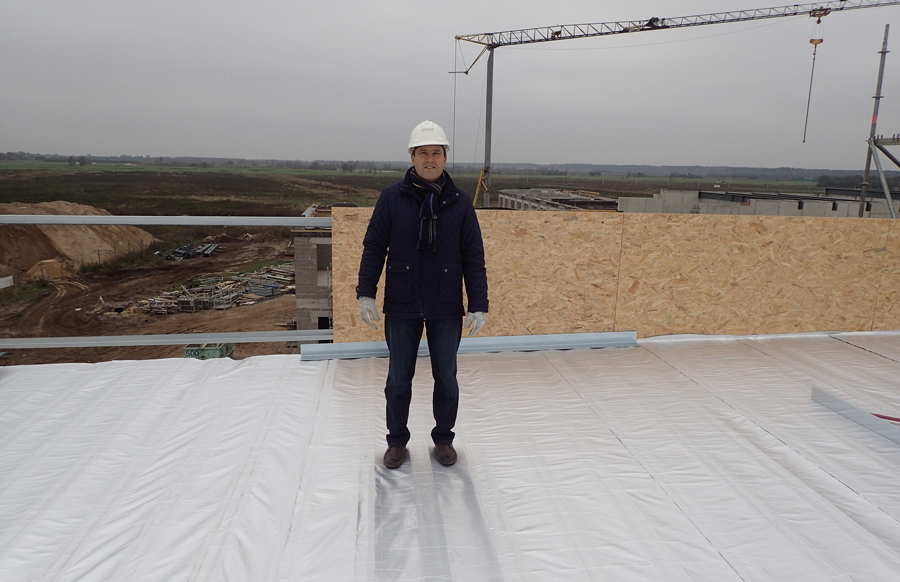
The key practical property shared by both: high tensile strength lets a person walk directly on the material, standing between the ridges of a profiled metal deck without tearing or stretching it - meaning a crew can move across already-installed material during installation rather than working around it. On a real roof, this isn't a minor convenience - it's often the difference between a smooth installation and a damaged membrane. Profiled metal decking leaves the vapor barrier unsupported between each ridge, spanning open gaps where an ordinary membrane would simply tear under a worker's weight.
Because VAPORSTOP CA 500 and CA 1000 are reinforced to resist exactly this kind of point-load stress, installers can step, kneel, and carry materials directly across the laid membrane as work progresses - no walkways, no temporary boards, no routing around finished sections. For large-footprint industrial and commercial roofs, where a crew may need to cover thousands of square meters in a single install, that freedom of movement translates directly into faster, less disrupted installation - and fewer accidental tears that would otherwise need patching before the roof is even finished.
This matters even more on a typical Indian industrial site, where a large metal-roofed warehouse or factory shed is often installed under real time pressure — ahead of the monsoon, or to meet a handover date — by a crew that can't afford to stop and build temporary walkways across an unsupported deck. A membrane that simply can't be walked on safely slows the entire crew down to the pace of its most careful worker; one built to be trafficked keeps the whole installation moving at the pace the project actually needs.
Where they differ
The main practical difference isn't in flexibility or heat resistance - those are identical - but in the mass and resulting density. A heavier membrane physically carries more material per unit area, which translates into a greater margin of mechanical strength and durability where the vapor barrier layer is under higher demand. It's not a coincidence that VAPORSTOP CA 1000 product description specifically notes the material "can be used on buildings of every construction type and height" and "can be used in combination with any thermal insulation and waterproofing material" — positioning it as the more versatile, higher-load solution, while VAPORSTOP CA 500 is the lighter, more economical option for standard projects without elevated requirements around building height or structural complexity.
| Characteristic | VAPORSTOP CA 500 | VAPORSTOP CA 1000 |
| Mass per unit area | 0.5±0.1 kg/m² | 1.0±0.1 kg/m² |
| Roll size | 50 × 1.08 m | 30 × 1.08 m |
| Coverage per roll | 54 m² | 32.4 m² |
| Softening point | ≥+100°C | ≥+100°C |
How to choose
VAPORSTOP CA 500 is the sensible choice for standard low- to mid-rise industrial and commercial projects, where the vapor barrier under the metal roof isn't carrying elevated mechanical or structural demand. It gives standard industrial and commercial roofs a lightweight, economical vapor barrier that installs fast and holds up reliably.
VAPORSTOP CA 1000 is the better fit for taller buildings, complex multi-layer roofing systems, and projects with higher reliability requirements (data centers, industrial facilities with intensive roof use), where the extra mass and strength margin is justified by the scale of the project. It carries that same reliability further, with the added mass and strength margin that taller buildings, complex roofing systems, and mission-critical facilities require.
For India specifically, that choice plays out across a huge range of metal-roofed construction - from standard factory sheds and warehouses to the kind of high-reliability facilities, like data centers, that are being built in the country at an accelerating pace.
VAPORSTOP CA 500 and CA 1000 aren't two different products solving two different problems - they're the same proven technology, calibrated to two different scales of demand. Choosing between these membranes isn't about picking the "better" membrane - it's about matching the product to the real demands of the roof above it.
TECHNONICOL offers both ends of that spectrum under one tested, field-proven line, giving contractors a vapor barrier that matches the scale of the project without re-engineering the installation method from one job site to the next.
 Share the article
Popular Articles