Damp proofing for your home in India: why the wall behind the wall matters
 13.10.2026
Every year, as the monsoon arrives, the same story repeats in homes across India. Paint starts to bubble. White, powdery salt deposits creep up the walls. A musty smell settles into the ground-floor room that was perfectly fine in March.
Dampness is one of the most common and most underestimated problems in Indian homes. The good news is that it is also one of the most preventable, if you deal with it where it starts: outside the wall, below the ground.
Why Indian homes are especially vulnerable
India’s climate puts buildings under real stress. Heavy monsoon rainfall saturates the soil around foundations. In coastal cities, humidity stays high for most of the year. In many regions, the water table rises sharply during the rains. Add dense urban construction, where drainage is often poor, and soil water has plenty of time to press against basement walls, retaining walls and ground-level foundations.
Concrete and masonry are not completely waterproof. They are porous, so water finds its way through, slowly and persistently.

Signs your home has a damp problem
- Peeling paint and blistering plaster, especially near the floor
- White salt deposits (efflorescence) on walls
- A musty smell in basements, store rooms or ground-floor rooms
- Dark patches or visible moisture after rain
- Damaged wooden furniture, flooring or skirting near external walls
Beyond comfort, damp is a health and cost issue. Mould affects air quality, and constant moisture can shorten the life of finishes, electrical fittings and even the structure itself.
Waterproofing is only half the answer
Most people think of damp proofing as a single coat of something applied to a wall. In reality, a durable solution works as a system:
1. A waterproofing layer that stops water from entering the structure.
2. Protection for that layer, so it is not damaged during backfilling or by soil movement.
3. Drainage, so water is guided away from the wall instead of sitting against it.
Many damp problems come back because the third step is missing. Even good waterproofing works harder, and ages faster, when water is constantly pressing against it.
Where dimpled drainage membranes come in
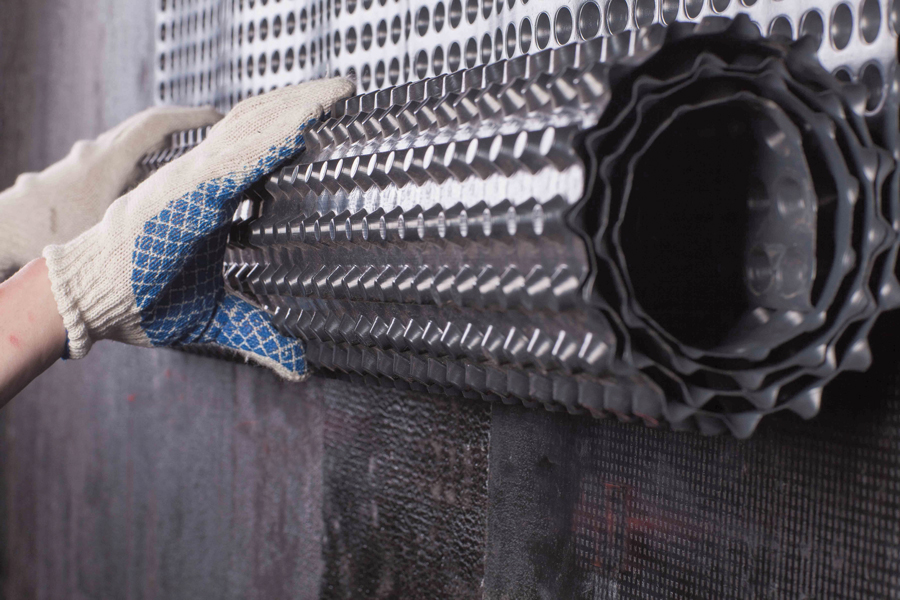
A dimpled membrane is a robust polymer sheet with a pattern of raised “dimples.” Installed on the outside of a foundation or basement wall, over the waterproofing layer, it does several jobs at once:
- Protects the waterproofing from damage by soil, stones and backfill.
- Creates an air gap between the soil and the wall, so the wall is not in direct contact with wet soil.
- Lets water drain down along the wall to the drainage system instead of building up pressure against it.
- Helps the wall breathe and dry, which reduces long-term moisture build-up.
TECHNONICOL offers dimpled membranes in its PLANTER range, including PLANTER Standard and PLANTER Geo.
For the best result, dimpled membranes are used together with a waterproofing layer suited to the structure, such as cementitious waterproofing, liquid applied waterproofing or polymer-bitumen membranes. The right combination depends on your building, your soil and your groundwater conditions.
Think about it before you build, not after
Damp proofing is far cheaper and simpler during construction than as a repair. Once the soil is backfilled and the walls are plastered and painted, reaching the outside of the foundation means excavation, cost and disruption. If you are building a new home or basement, ask your architect and contractor about foundation waterproofing and drainage at the design stage.
Quick checklist for homeowners
- Ask what waterproofing system is specified for the foundation and basement walls.
- Check that a drainage and protection layer is included, not just a coating.
- Make sure water has a clear path away from the building.
- Choose materials with proper technical documentation and manufacturer support.
- Insist on correct installation: details at corners, joints and wall-floor junctions decide the result.
Planning a new home or a basement? Contact the TECHNONICOL India team to discuss the right damp proofing solution for your project.

 Share the article
Popular Articles