A Roof That Works Harder in India’s Climate
 15.10.2025
 In India, a roof is no longer just a protective cover — it is becoming a platform for clean energy generation. With increasing demand for rooftop solar systems across states like Maharashtra, Gujarat, Tamil Nadu, and Karnataka, homeowners and developers are looking for materials that ensure durability, waterproofing, and long-term stability.
TECHNONICOL India provides roofing and waterproofing solutions that are ideally suited for solar panel installations in Indian climatic conditions, including high temperatures, heavy monsoon rains, strong winds, and coastal humidity.
Why Indian Homes Need Solar-Ready Roofing Systems
India receives 300+ sunny days per year, making rooftop solar an excellent investment. However, the roof beneath the panels must be engineered to handle:
1. High UV Exposure
Indian roofs experience extreme solar radiation, which can degrade low-quality materials.
TECHNONICOL shingles and membranes are UV-resistant and tested for hot climates.
2. Monsoon Intensity and Waterproofing
States like Maharashtra and Kerala face months of heavy rainfall.
A solar installation is only reliable if the roof has proper hydro-protection, sealing, and wind-resistance.
3. Temperature Swings
Indian rooftops can reach 70ºC in summer and cool rapidly during storms.
Roofs must maintain elasticity and adhesion under these conditions.
4. Long-Term Load from Solar Panels
Solar frames add static load + vibration load during wind.
Proper mounting requires a stable and durable roofing base layer.
Best Roofing Materials for Solar Installations in India
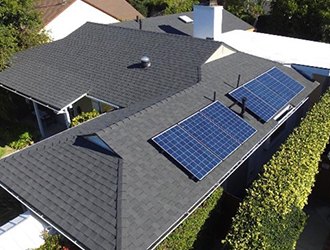
TECHNONICOL offers roofing systems that are specifically suitable for solar panel mounting:
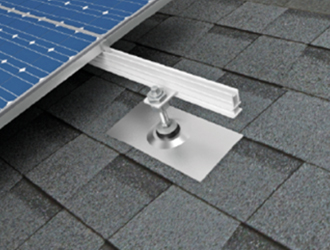
An example of a TECHNONICOL roofing solution (system) for pitched roofs with asphalt shingles covering and a set of solar panels secured with mechanical fasteners.
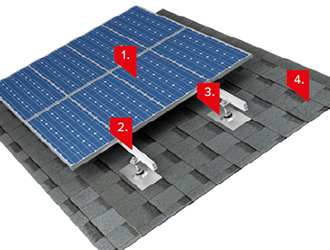
System composition:
1. Solar panels
2. Supporting structure (mounting rail)
3. System fastening element (with an additional metal plate)
4. TECHNONICOL asphalt shingles
Installing solar panels on a roof with shingles is a task that requires a special approach. Asphalt shingles consist of several layers, including a bitumen base and a mineral dressing, making them vulnerable to mechanical damage. Improperly fastened solar panels can lead to leaks, roof damage, and a shorter lifespan for the roof.
By following the step-by-step instructions and advice from TECHNONICOL, you can install solar panels without damaging your roofing and protect it from leaks during installation and operation of solar panels on a roof covered with asphalt shingles.
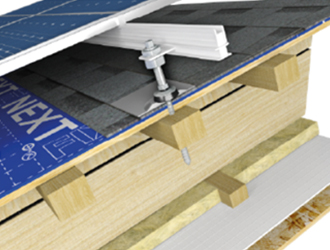
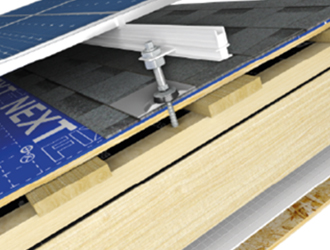
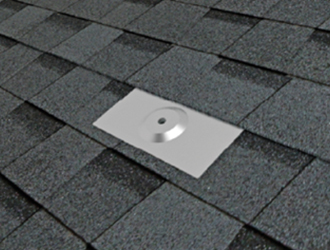
-
Before installing a solar panel system, make sure that the existing roof has a service life of at least 10 years. On roofs older than 15 years, it is recommended to install a solar panel system only after consulting with the roofing material manufacturer or its representative.
-
At the beginning of the solar panel system installation, clean the roof deck from debris and dust.
-
The first step in assembly is to precisely mark the mounting locations for the solar panel system support structure. All mechanical fasteners for the system must be installed in rafters or reinforcement battens with a minimum cross-section of 50x50 mm.
-
The mounting must be done in accordance with the solar panel mounting system manufacturer’s recommendations.
-
For mounting the solar panel support structure, it is recommended to use aluminum or stainless steel profiles. This will prevent corrosion and, therefore, protect the roof from possible discoloration caused by corrosion.
-
For fastening, you can use special metal plates with a localized profile riser at the fastening point. It is recommended to use aluminum or stainless steel plates. These plates create a cascading effect and drain water away from the connector mounting area, making this solution functional and durable. This is suitable for both new and existing roofs with asphalt shingles.
Frequently Asked Questions (FAQ)
1. Can solar panels be installed on asphalt shingles in India?
Yes. TECHNONICOL shingles are suitable for rooftop solar installations provided the mounting brackets are fixed to structural rafters and sealed properly.
2. Do solar panels damage the roof during monsoons?
No — if waterproofing is reinforced. TECHNONICOL membranes protect mounting penetrations from heavy rainfall and wind uplift.
3. What is the ideal angle for solar panels in India?
Depending on the state, between 10° and 30° for optimal efficiency.
4. Is additional insulation needed under a solar system?
Recommended. It reduces heat transfer into the home, especially in hot cities like Delhi, Nagpur, Chennai, and Hyderabad.
5. Which TECHNONICOL materials are recommended for solar roofs?
-
Asphalt shingles
-
Polymer-bitumen membranes
-
Polyurethane and XPS insulation
-
Waterproofing mastics
Contact TECHNONICOL India
To get specifications, installation guidance, or a project consultation in India:
TECHNONICOL India Office — Mumbai
+91 22 3520 6466
info@technonicol.in
We provide technical support for architects, builders, roofing contractors across India.
 Share the article